Step 1 of five
A Pumphouse That Never Stopped
A small brick building on a fenced lot, put up to move water and still moving it. Nothing about it has been marketed, restyled or reused, which is why it is worth an hour.
The five questions
| What it was built to do | House pumping plant for a district of the municipal water system, with a switch room, a small office and space for one attendant. |
|---|---|
| What happens there now | Identical function, unattended, with the machinery replaced twice and the building not. |
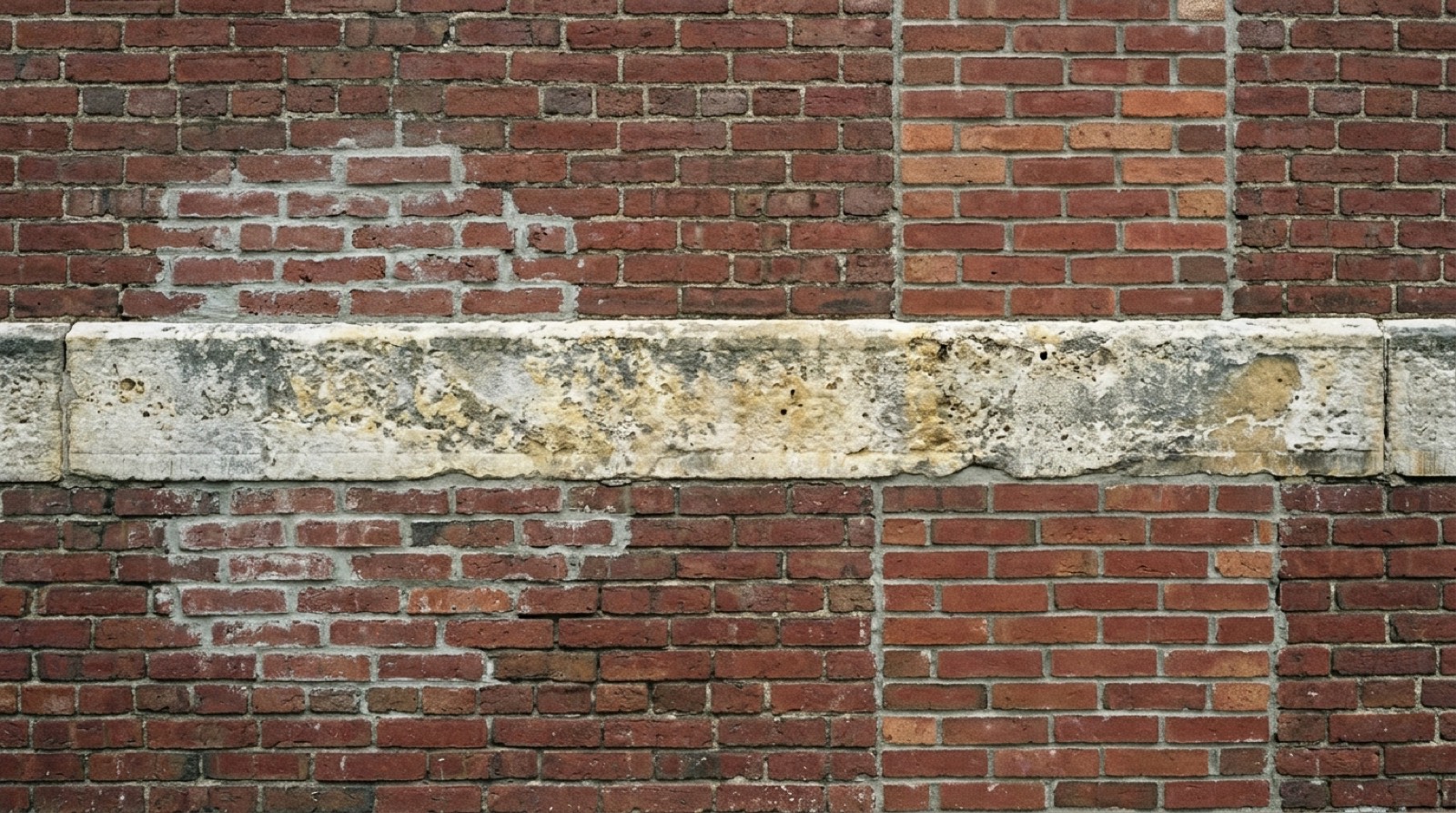
| What you can still read off it | The vent openings high on each gable, the granite sill course, and the door on the short side rather than the long one, which is how you know it was built around a machine. |
| Where you can stand to see it | The public sidewalk outside the fence. The lot itself is not open and there is nothing to see from inside it that you cannot see from outside. |
| What has gone for good | The attendant, the coal delivery on the far side, and the chimney, taken down to the roofline and capped in a lighter brick you can pick out from the corner. |
Why utility buildings win
Because the thing they do never goes out of fashion and never moves.
A shop follows the money. A mill follows the labour. A pumping station follows the water, and the water is where the ground put it. That is the entire reason this step of the axis is dominated by fire, water, power and rail, and it is the most useful generalization in this paper.
Built around a machine
Domestic and commercial buildings are laid out around people, so the door is in the long side and the windows are regular.
This one is not. The door is on the gable end, the windows are high and unequal, and the plan is a single room with no partitions. That happens when a building is wrapped around one piece of equipment that had to be got in and might one day have to be got out.
Once you can see that difference you can see it everywhere, and it survives conversion better than anything else on the list.
The capped chimney
Look at the corner where the chimney was. The stack came down at some point after the boiler went, and the stub was capped with brick that does not match.
This is the same evidence as the bricked hayloft in the firehouse and it means the same thing: the building outlived one technology and was cheaper to adapt than to replace.
Every mismatch in a wall is a date. Not a precise one, but a date.
What you will not get
Inside. The lot is fenced and the building is unattended, and no photograph is worth climbing a fence at a piece of water infrastructure, so none will be taken from inside one for these pages.
We say that plainly rather than leaving it to be inferred, because this is the one entry where somebody might be tempted.
Practical
- Sidewalk only, and the sidewalk is narrow. Watch the traffic rather than the building.
- No facilities, no shade, nowhere to sit.
- Fifteen minutes is enough unless you are drawing it.
- Do not photograph through the fence at anything mechanical. It reads badly and the building is not the machinery.